Part 1 Understanding the Challenges of Small Populations
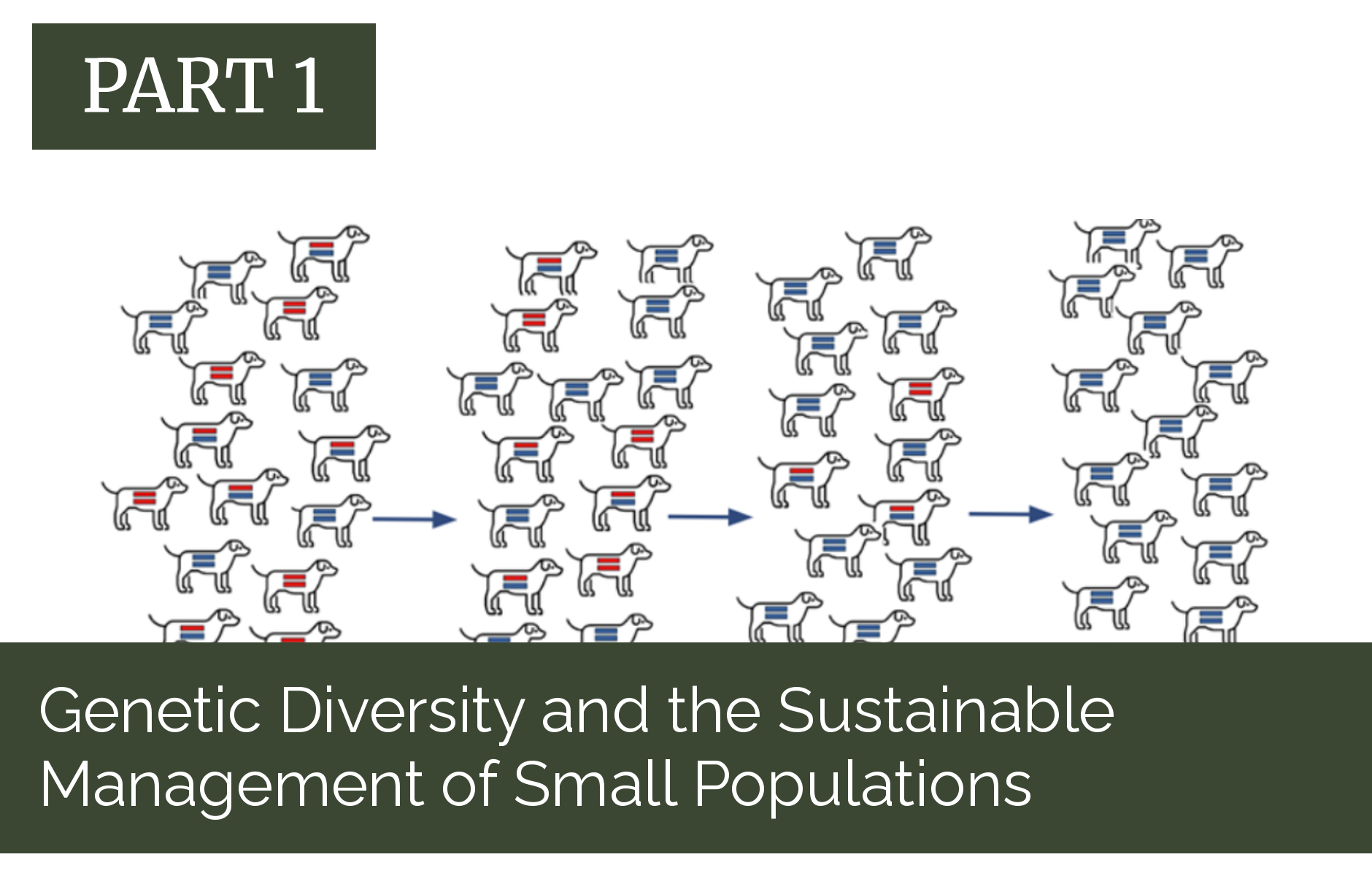
Did you know that almost all dog and cat breeds are genetically small populations? Fifteen years ago, a landmark study found that more than a third of the purebred dog genome had already lost all its variation. Keeping breeds viable in the long term therefore requires special attention – and a sound understanding of genetic diversity.
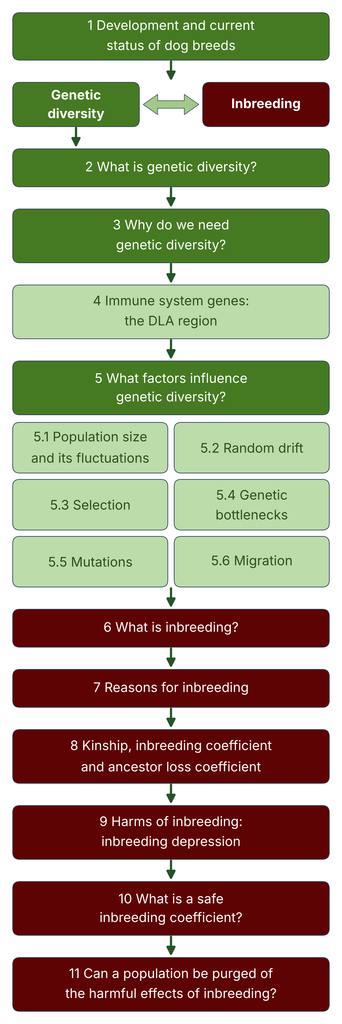
In this first part of a three-part course Genetic Diversity and the Sustainable Management of Small Populations, you will learn what genetic diversity is, why it is needed and which factors determine how much of it a population has. You will learn what inbreeding is, what causes it, what risks it carries and whether a breed can purge itself of its effects.
Each lesson includes a discussion section where you can ask questions about the topics covered. I answer every question personally.
What you will learn in Part 1
11 lessons in two strands: genetic diversity, and inbreeding:
By the end of Part 1 you will be able to
- explain what genetic diversity is and why it matters for health, fertility and adaptability
- recognise the forces that reduce diversity: small population size, genetic drift, selection, bottlenecks and popular sires
- tell the difference between intentional inbreeding and inbreeding caused by chance
- read an inbreeding coefficient and know what it does – and does not – tell you
- judge for yourself claims such as “inbreeding doesn’t matter, the breed will purge itself”
Who is this course for?
The course is designed for anyone interested in animal breeding and animal welfare: breeders, breeding advisors, dog and cat owners – everyone who wants to understand what sustainable population management means in practice.
Are there any prerequisites?
A basic understanding of genetics is enough – for example, what you learned in biology at upper secondary school. If you need a refresher, Parts 1 and 2 of the online course Mastering Animal Genetics (Genes and Their Regulation; Transmission of Genes from Parents to Offspring) cover the essentials.
Study at your own pace
Once the course opens, you can study whenever and wherever you like, at your own pace.
How the course works
The course consists of written lessons illustrated with figures, diagrams and real breed examples – there are no lecture videos. You can read at your own pace, return to any lesson whenever you need it, and use your browser’s translation tool if English is not your first language. Each lesson includes interactive exercises and a discussion section where you can ask questions.
11 lessons, about 2.5–3 hours of reading in total. Most lessons take 5–15 minutes; you can pause and continue at any point.
Access for 6 months
The course material is available to you for 180 days, or about six months.
Price and payment
The course costs 39 €. You can pay securely by credit card or PayPal.
Satisfaction guarantee
If you are not satisfied with the course, let me know within 14 days of purchase and I will refund your payment.
What participants say
Feedback on the Finnish version of the course:
“The course was extremely clear, very well structured and logical. Even as a ‘professional’ I found it an excellent refresher, especially on population genetics – it brought back what I learned during my studies. I find it inspiring how well you explain things. Several times I exclaimed out loud, ‘Oh yes, good that you reminded me!’ There was also plenty of new information and good examples from livestock breeding. Most importantly, I feel I now have a few more tools for explaining to the breeders of my breed why, for example, DNA-based diversity figures or COI percentages should not be treated as breeding values in themselves.”
Mirkka Montonen – breeding advisor of the Finnish Retriever Association and chair of the breeding committee of the Finnish Curly Coated Retriever Club
Coming later: the next parts of the course
Part 2: Measuring Diversity and Inbreeding
How are diversity and inbreeding measured, and what do the results actually tell us?
Part 3: Sustainable Breeding in Practice
How can you influence the sustainability of a population through breeding choices and planning? What are the most effective ways to manage the genetic variation of an animal population?